CRIT Studio · CRIT ColourStudio · released v1.0.0, August 2026
For students who can recite colour theory and still not see it.
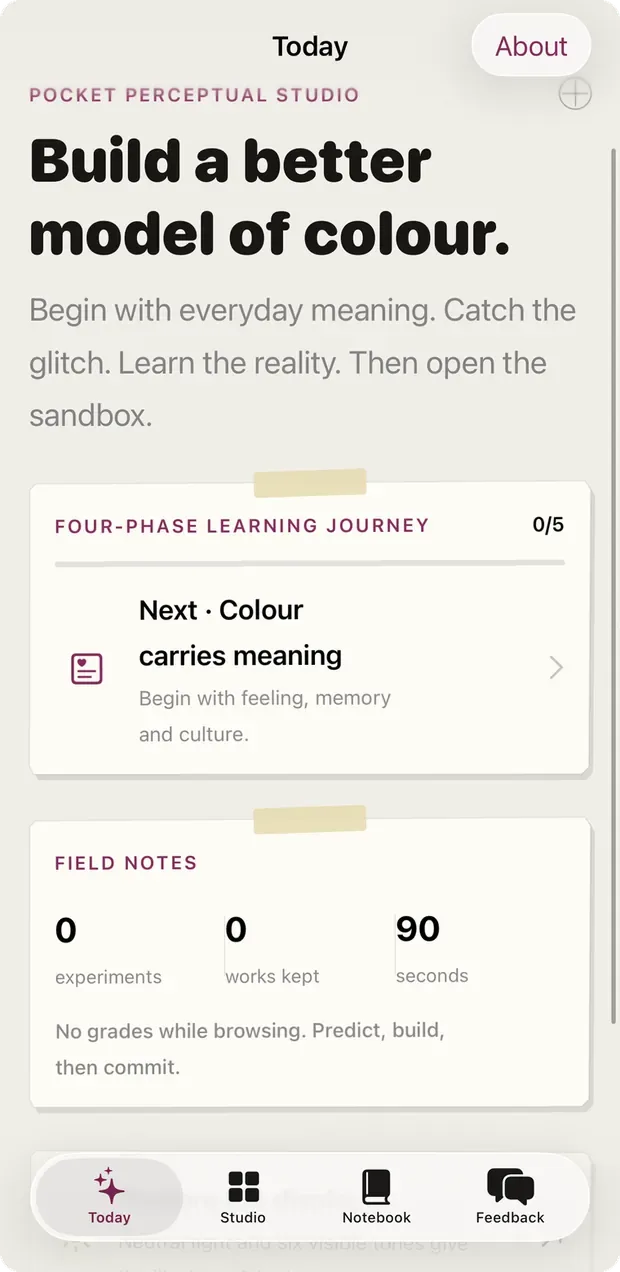
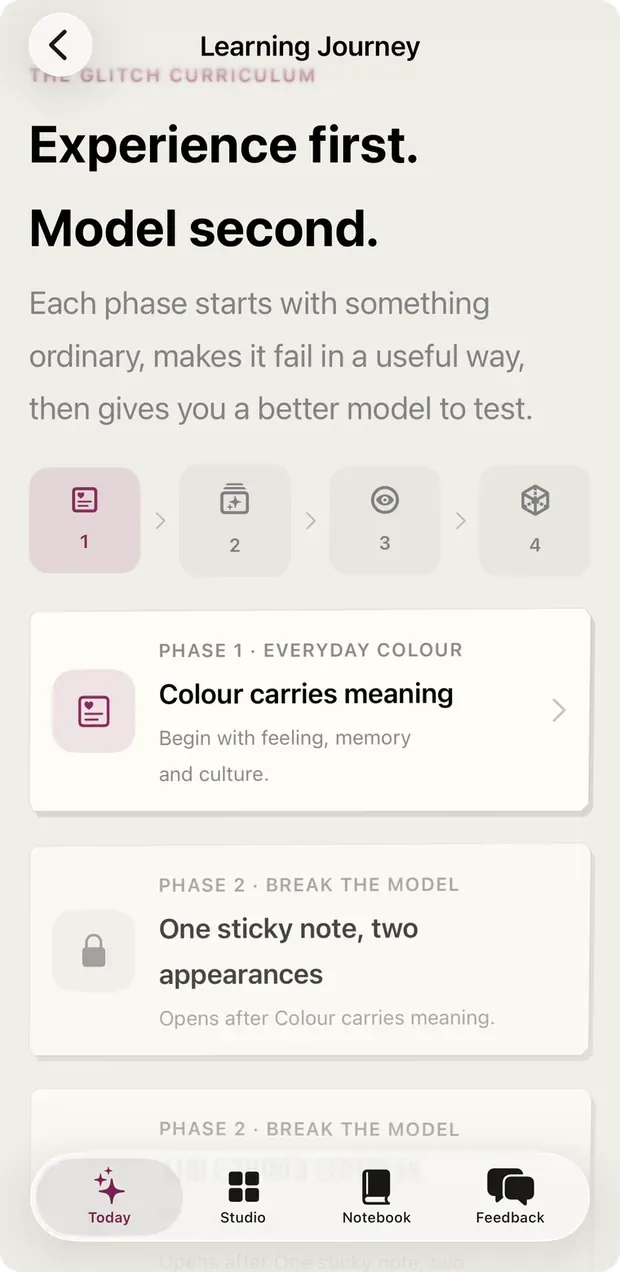
Four phases that start with something ordinary, make it fail in a useful way, then offer a better model to test. Phase one asks what a colour means before it becomes a number.
Get it on the App Store
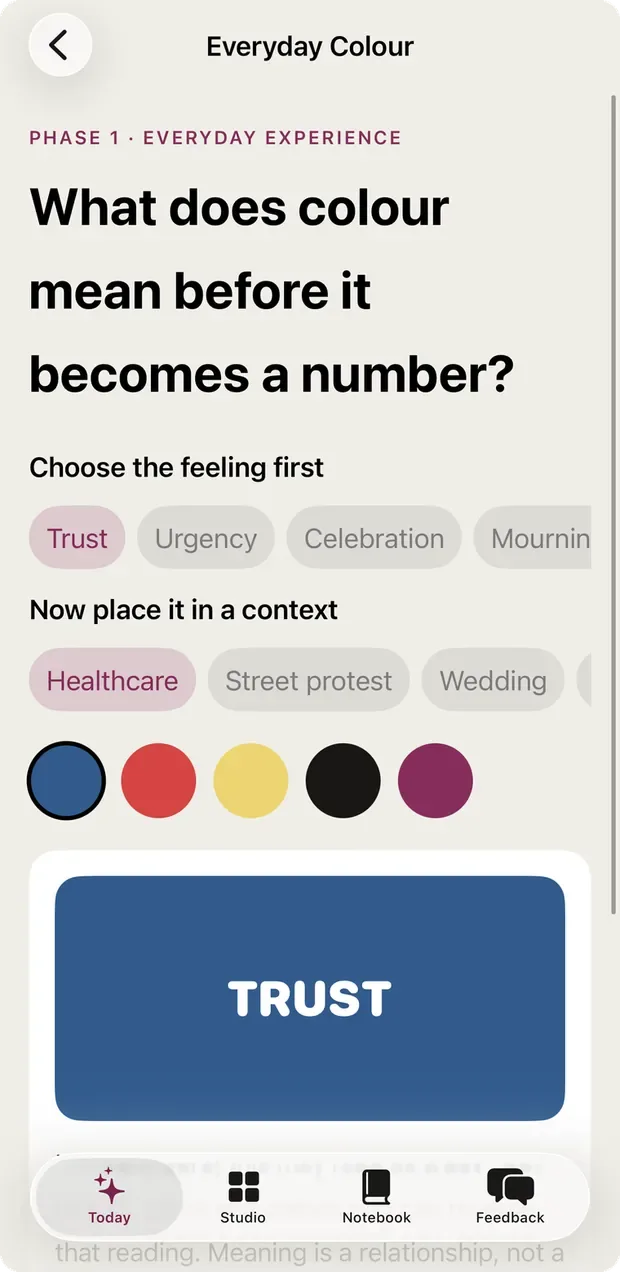
Today, the learning journey, and a lesson in progress
Why it works this way
Experience first, model second.
Colour theory is easy to memorise and hard to see. A student can name every harmony on the wheel and still not notice that the same grey looks warm against one background and cold against another.
So the app does not open with definitions. Each phase starts with something ordinary, arranges for it to fail in a way you can feel, and only then offers a model that explains what happened. The model arrives as a fix for a problem you have just had, rather than as a fact to be revised later.
Phases unlock in order for the same reason. The second will not open until the first is finished, because the second is an answer to a question the first is supposed to raise.
Phase one asks what a colour means before it becomes a number.
Structure of the app
Specifics
What it is, and what it deliberately is not.
Structure
Four phases, five lessons, unlocked in order. A session runs around ninety seconds, which is short enough to do between other things and long enough to change what you notice afterwards. No account, no sign-in, nothing to set up.
- structureFour phases, five lessons, unlocked in order
- sessionAround 90 seconds
- accountNot required
- devicesiPhone and iPad
Your display is part of the experiment
Colour judgement depends on the screen you are looking at and the light you are sitting in. The app asks you to set neutral light and pause Night Shift before you start, because a warm-shifted display quietly changes the answer to every question it asks.
- before you startNeutral light, Night Shift paused
- limitsNot a calibration tool and not a substitute for one
For teaching
Built in a classroom, for a classroom.
The app came out of teaching colour to design students and watching the same gap appear each year between what they could recite and what they could see. It is built to survive a cohort using it badly in week one: no account to lose, no setup to get wrong, and short enough that a lesson can be done in front of you.
If you are running it with a group and something about the sequence does not work for your students, that is worth an email. The structure is a hypothesis, not a finished position.
Get the app
Known limits. Colour judgement depends on your display and your lighting. The app tells you this and asks you to set both before starting, but it cannot check either.
Releases
What changed, and when.
- v1.0.0First App Store release, August 2026.